
You might use it every day, but how much do you really know about humanity’s most essential invention? Get ready to have all your preconceived notions flushed away with these fascinating toilet facts!
People will spend 92 days of their lives on the toilet.
A majority of a person’s lifetime is spent on daily necessities such as sleeping, eating, and – you guessed it! – using the bathroom. As it turns out, you’ll most likely spend a third of a year on the loo throughout your lifetime. That’s 92 days to be exact. If that seems like a waste, you could probably cut it back by NOT being one of the 65% of people who bring their phone to the bathroom.
The world record for sitting on the toilet is 116 hours.
Yes, you read that right! Don’t worry, the overwhelming majority of that time wasn’t spent “going”. In fact, the toilet that this world record holder sat atop (for a looong time) wasn’t even hooked up to plumbing. Surprisingly, the Belgian was allowed a five-minute break each hour which he could rack up for a longer break. We’ll let you decide if that sends his accomplishment down the drain.
People visit the toilet 6 to 7 times each day.
We’re not even counting the times you go to the bathroom to brush your teeth, wash your face, or take a shower. Most people actually visit the toilet up to 7 times every single day. Don’t worry if you fall below or even above this average. Everyone has a different response when answering nature’s call! Fluid intake, activity level, and age can all impact how many times you hit the bathroom on a daily basis.
Americans spend $182 on toilet paper every year.
Doesn’t seem like that much? Well, that adds up to around $11,000 across a lifetime…on toilet paper! Put another way, the average American goes through 85 rolls of toilet paper annually. That translates to more than 13,000 sheets every year. You might’ve been able to guess it, but men tend to burn through more rolls than the ladies.
Further Reading: Useful Toilet Paper Roll Hacks
The first toilet was built in 3,500 B.C.
Historians estimate the first (crudely) functioning toilet was constructed by the Sumerians somewhere between 3,500 and 3,000 B.C. To give you an idea of just how old that really is, the first book wasn’t written until 2,600 B.C. At least our early ancestors had their priorities straight! The historical timeline of the toilet might have begun thousands of years ago, but the field of sanitary engineering is always advancing.
Functional toilets still aren’t the norm.
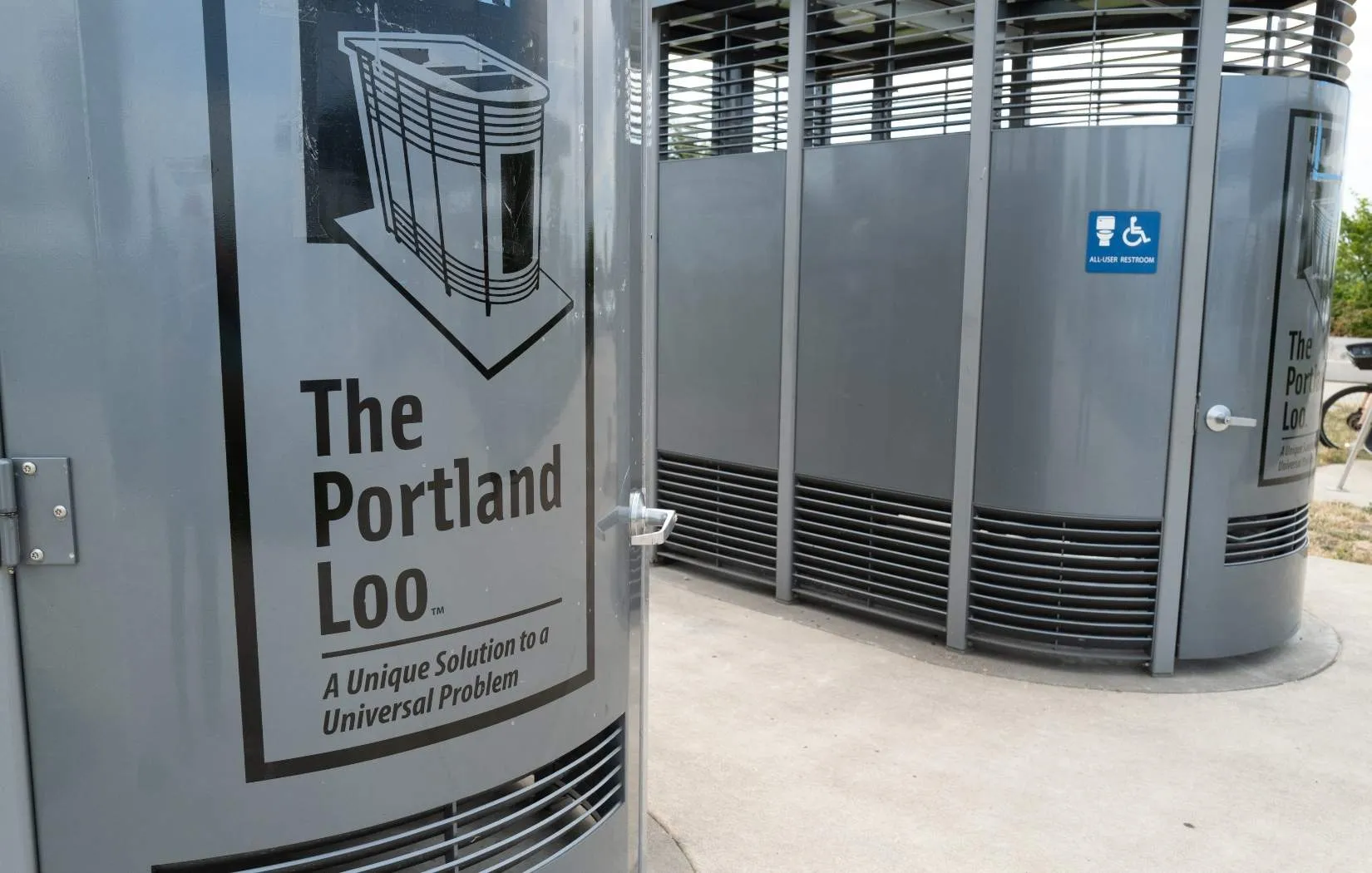
Tragically, 60% of the world’s population (around 4.5 billion people) don’t have functional toilets in their homes. Despite being one of the most developed countries on Earth, even the US has a frightening shortage of public toilets. Fortunately, plenty of non-profits, NGOs, and toilet revolutionaries like the Portland Loo are pushing back to make a lack of public restrooms a thing of the past!
It pays to go (to the tune of 550%).
If you’re wondering who can benefit from a public restroom, the answer is everyone. Having a secure, reliable, and functional place to go improves the quality of life and overall health of entire societies. The World Health Organization has estimated that every dollar spent on sanitation (including the installation of toilets) yields an impressive return of $5.50! Just like running water, fully operational bathrooms build the foundation for everything else.
The Portland Loo is transforming the public toilet.
What started out as a Portland-focused project has spread to over a dozen cities and two continents! The Portland Loo is redefining the public restroom by improving safety, lowering costs, and optimizing design. If you’re interested in learning more about bringing a Loo to your city, please contact us for more information.