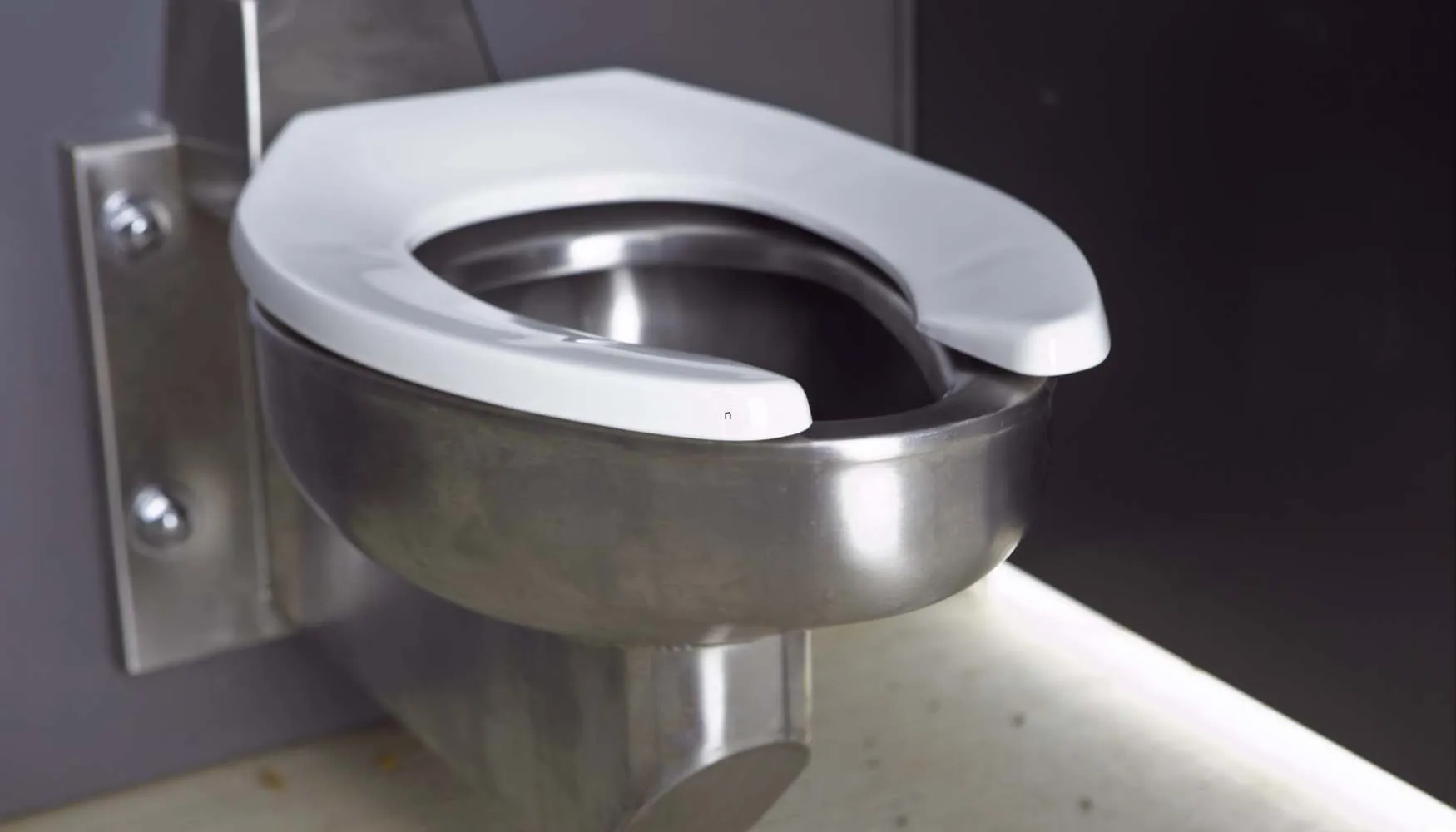
You’ve noticed it. Every public restroom, from the airport to the gas station down the street, has that same U-shaped seat with a gap at the front. Your bathroom at home doesn’t.
That’s not an accident or a manufacturing shortcut. It’s a deliberate design decision, backed by practical reasoning.
Learn why public restrooms use split toilet seats, how plumbing codes factor into the design, and the surprising problems that one simple gap helps to solve.
Table of Contents
- Why Do Public Toilet Seats Have a Gap in the Middle?
- 5 Reasons Why Split Seats Make Sense Beyond the Code
- What Split Toilet Seats Mean for Public Restroom Planning
- Build Restrooms That Are Designed To Last with The Portland Loo
Why Do Public Toilet Seats Have a Gap in the Middle?
Open-front seats are required by plumbing code in most public restrooms, mainly so women can wipe without touching the seat surface and to reduce contact with a surface that many people have already used. It’s a hygiene decision built into the code.
The requirement traces back to the American Standard National Plumbing Code of 1955, and it was cemented into modern building standards by the International Association of Plumbing and Mechanical Officials (IAPMO) in 1973. Lynne Simnick, IAPMO’s Senior Director of Code Development, has said the design is intended to let women wipe the perineal area without making contact with the seat. That’s the core rationale, and it’s held up for close to 70 years.
A Closer Look at the IAPMO Code Requirement
IAPMO’s Uniform Plumbing Code, section 409.2.2, states that water closet seats in public or commercial settings must be “of the open front type,” with one notable exception. Restrooms equipped with automatic seat cover dispensers are exempt, since the disposable barrier addresses the same hygiene concern in a different way.
Some facilities choose that route instead of the split-seat requirement, particularly in higher-end commercial spaces where a full seat feels more polished. But it comes with an added cost: dispensers, refills, and one more mechanical part that can break or run empty.
Enforcement isn’t uniform everywhere. Most municipalities adopt the Uniform Plumbing Code as their own local standard, but plumbing regulation ultimately sits at the state and local level. Not every jurisdiction enforces section 409.2.2 the same way, which is part of why you’ll occasionally spot a full seat in a public restroom that technically shouldn’t have one.
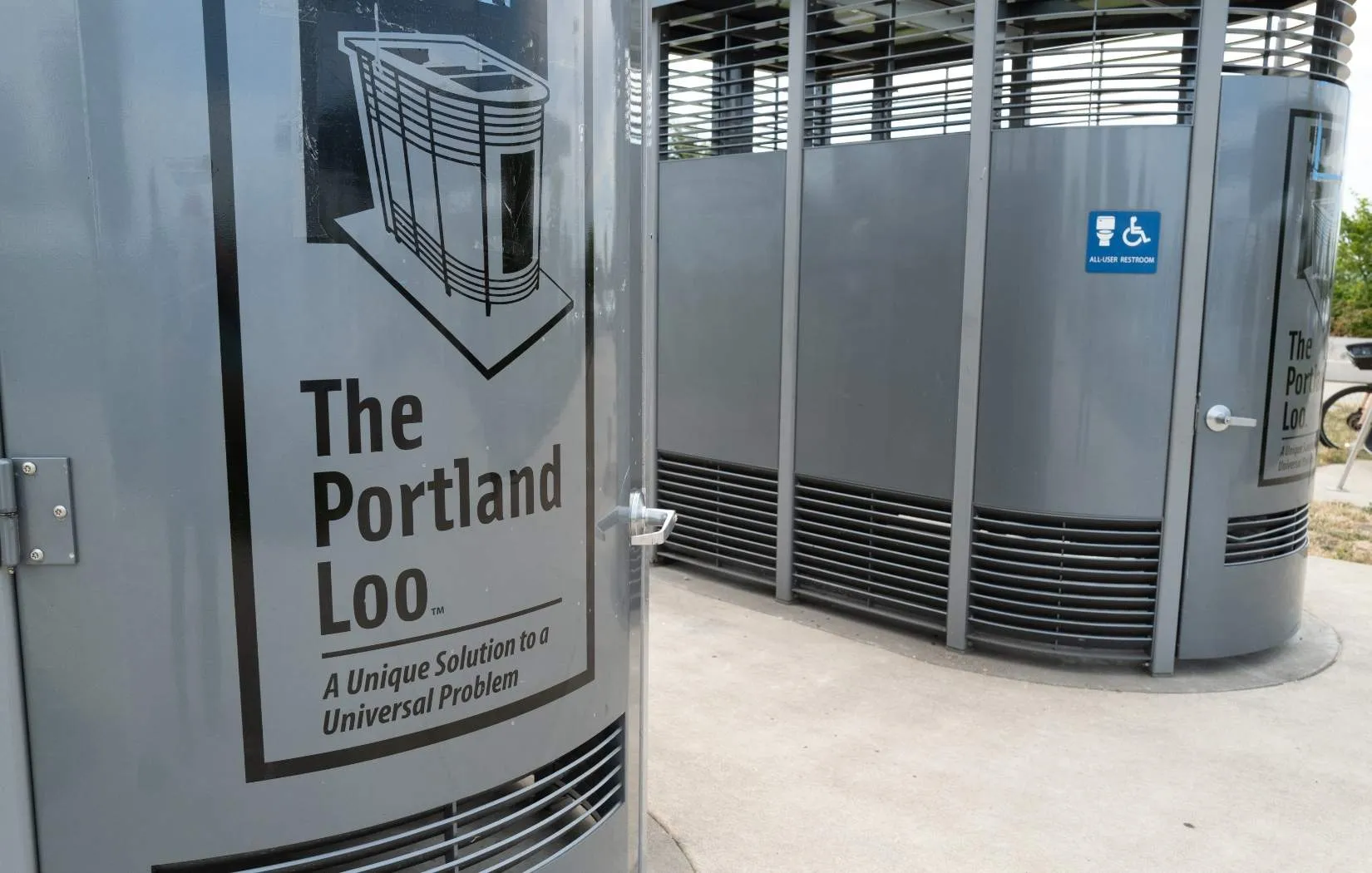
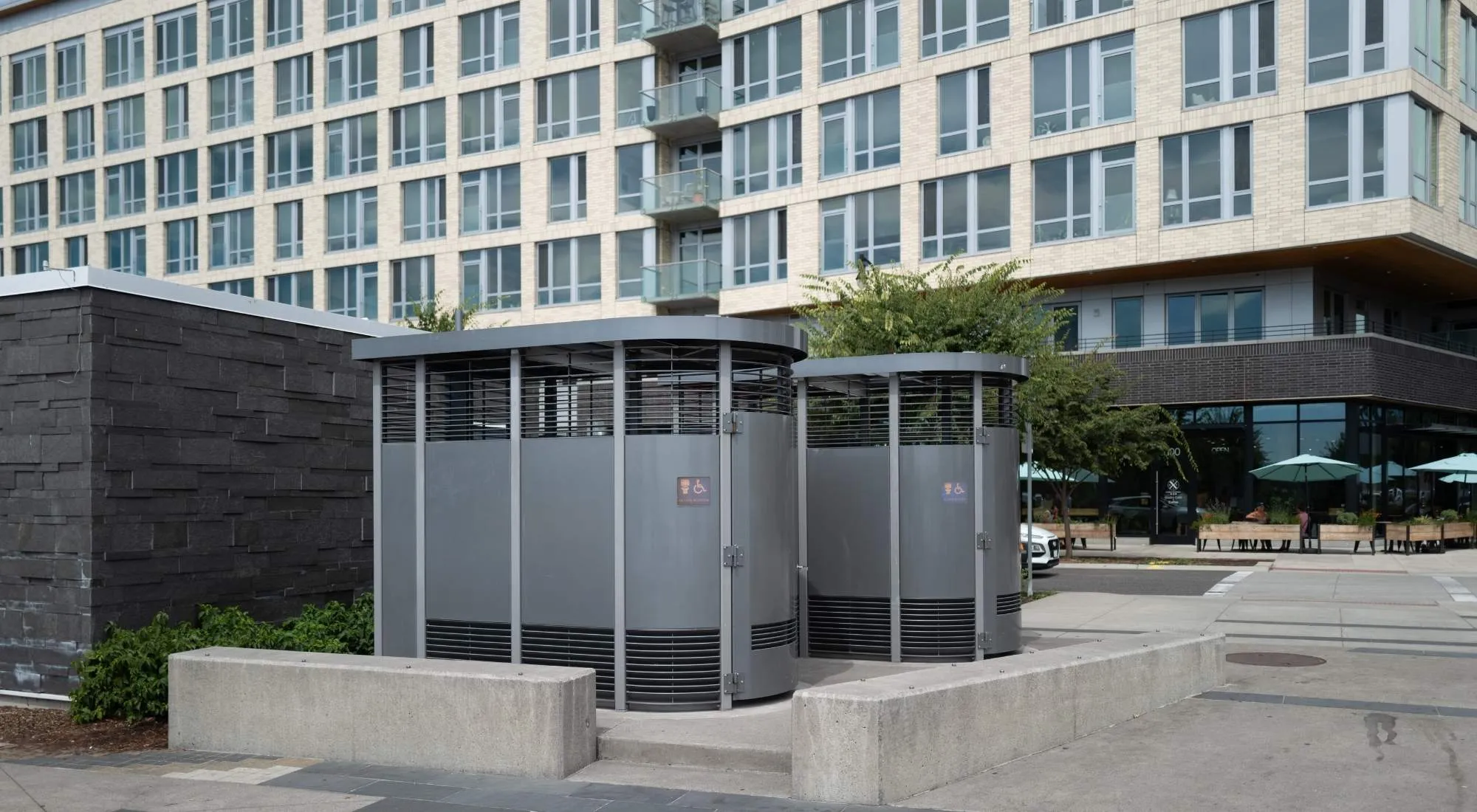
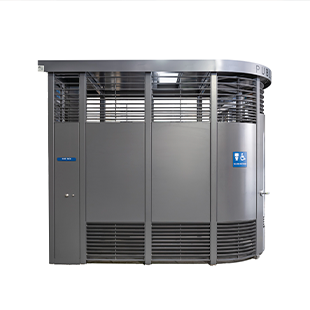
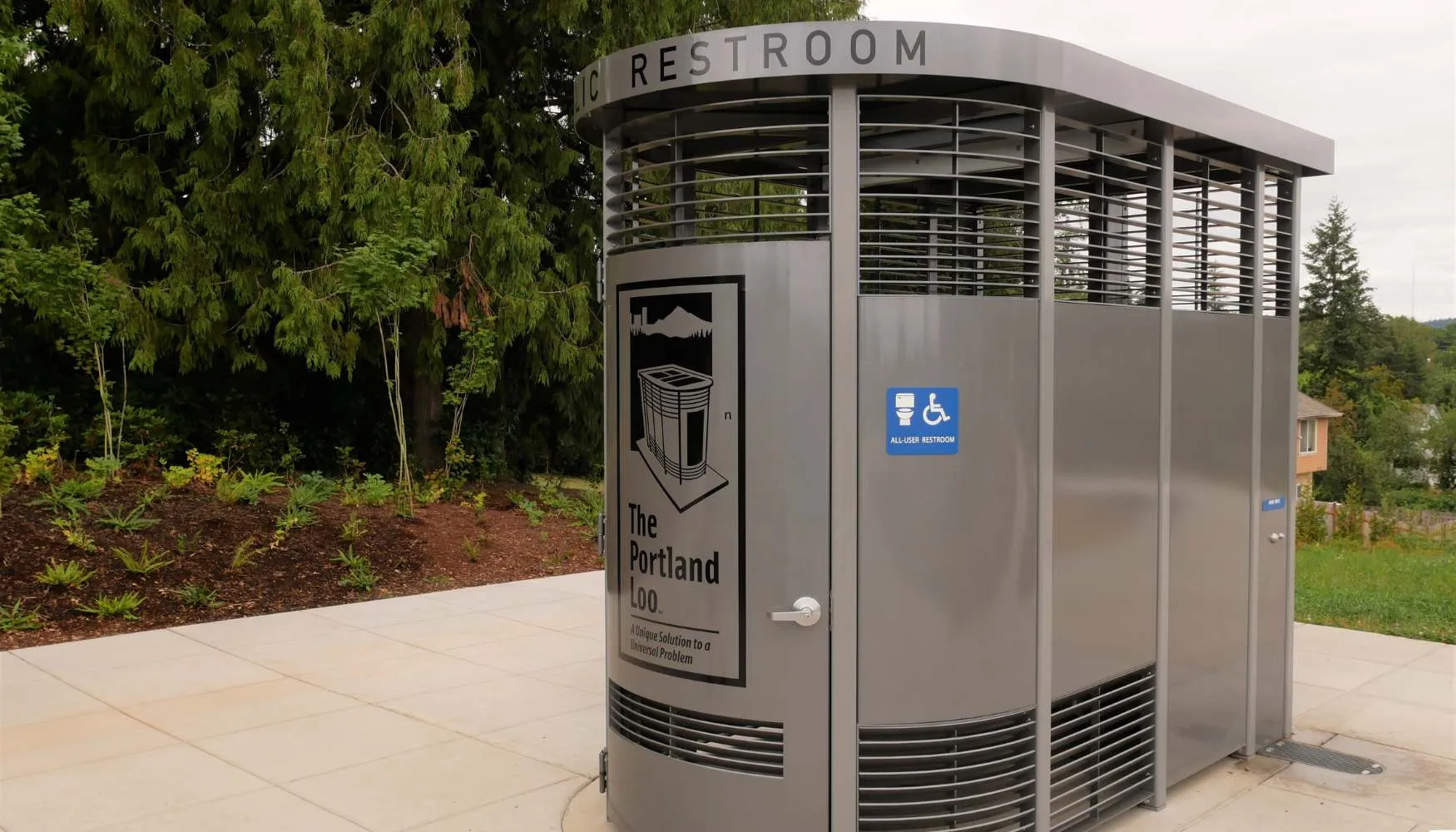
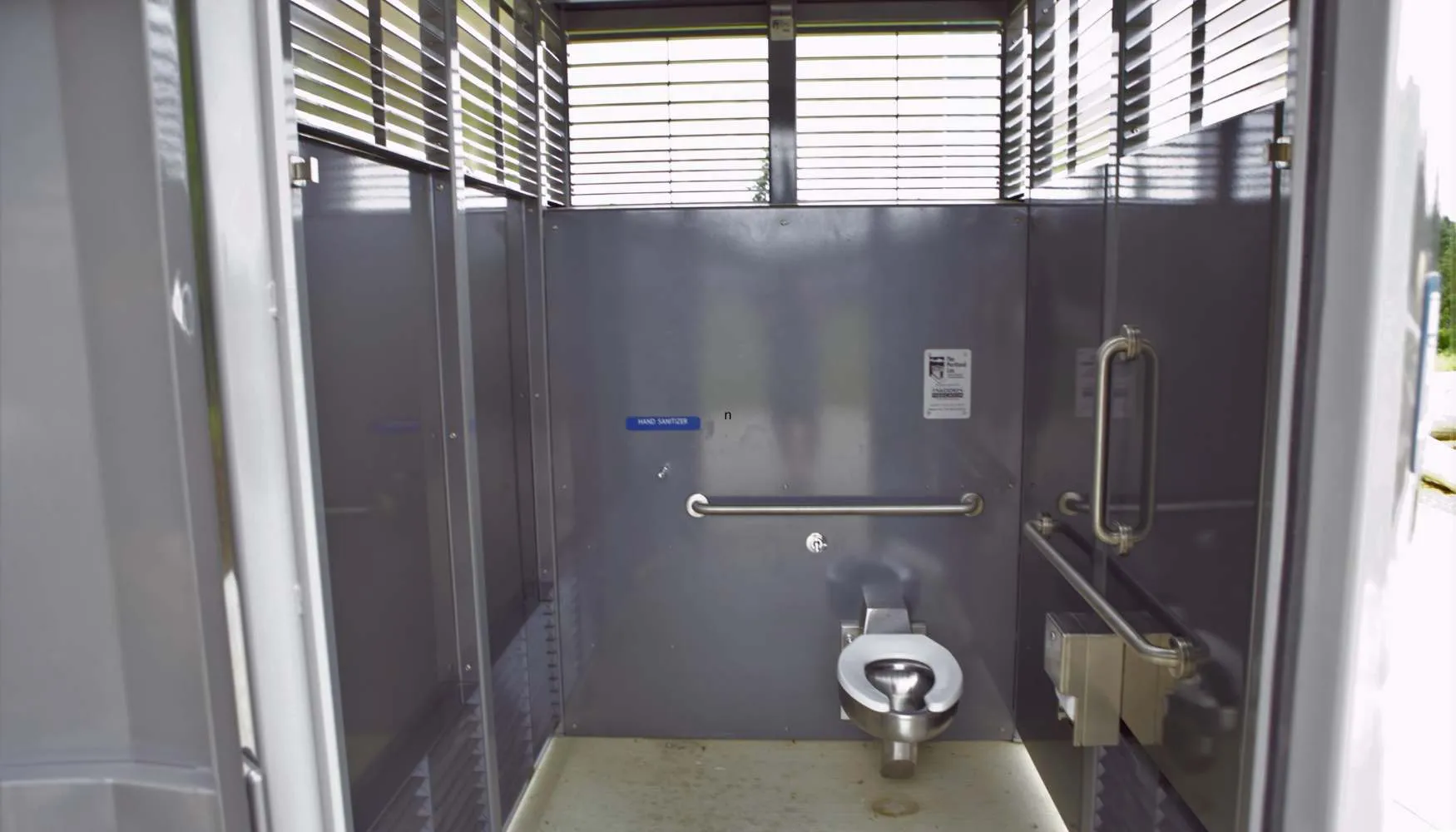
The Portland Loo is designed specifically for public use, with practical features that support hygiene, durability, and easy maintenance in high-traffic settings. That includes an open-front toilet seat that fits the same public restroom standards discussed above.

5 Reasons Why Split Seats Make Sense Beyond the Code
#1: Better Hygiene in Public Restrooms
Social media has floated theories that split seats are just a cheap manufacturing trick, but the hygiene logic behind them holds up. The gap is sized to reduce direct contact with the seat, and it also addresses a problem full seats can’t: standing urine.
A closed seat has a curved front edge where urine can pool or splatter, and the next person to sit down inherits it. An open front removes that surface entirely. There isn’t a large body of peer-reviewed research measuring exactly how much this cuts down on contamination, so it’s fair to say the design is intended to reduce contact rather than proven to eliminate it entirely. Still, the mechanism is straightforward, and the code predates any cost-saving argument by decades, which undercuts the idea that it’s purely about cutting material.
#2: Easier To Clean and Maintain
The smaller surface area in split seats means less contact area, which can translate into fewer deep cleans and less spread of contamination across a busy facility. U-shaped seats also use less material than full O-shaped seats, which lowers replacement cost when a seat cracks or needs swapping out, something that happens often in high-traffic public settings.
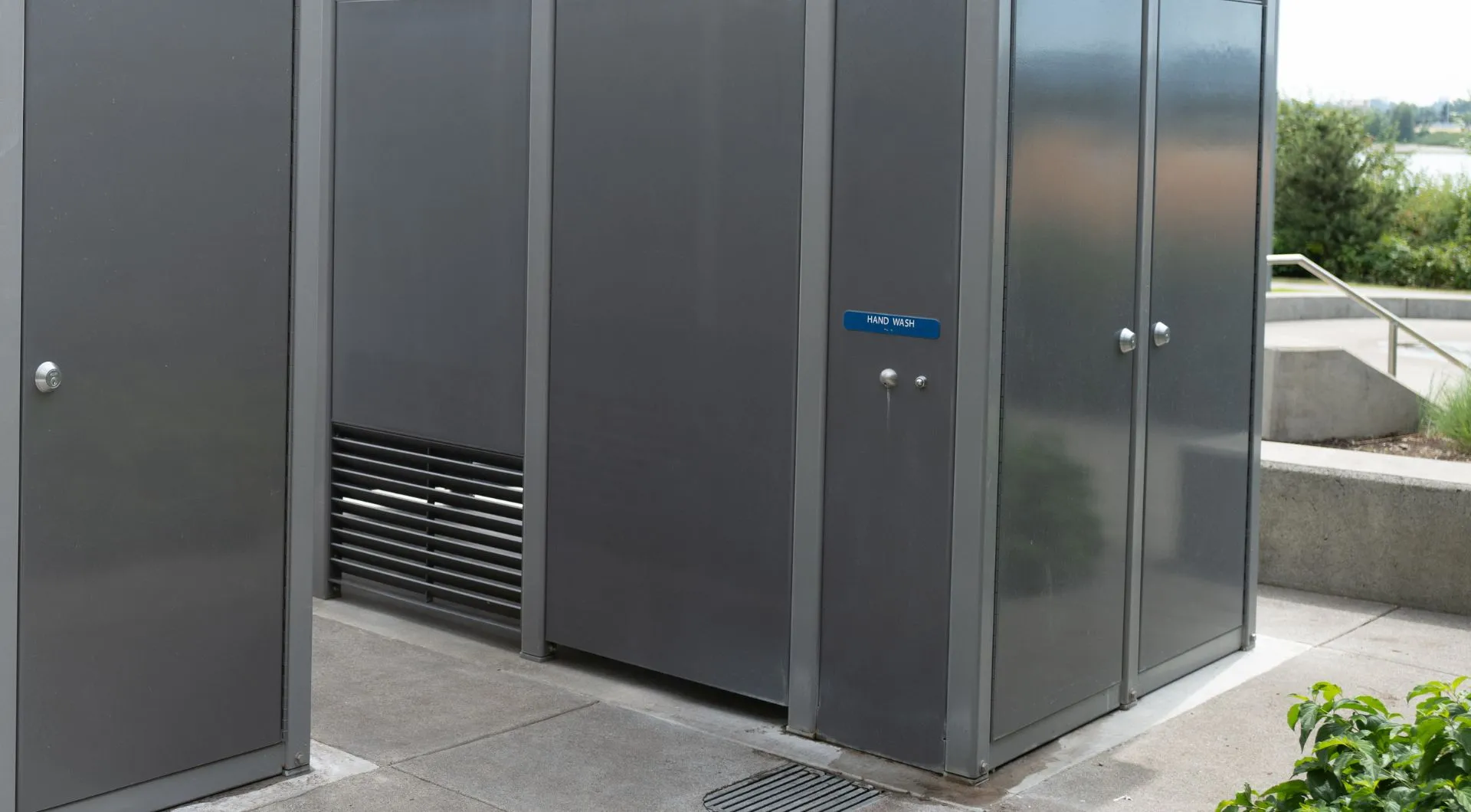
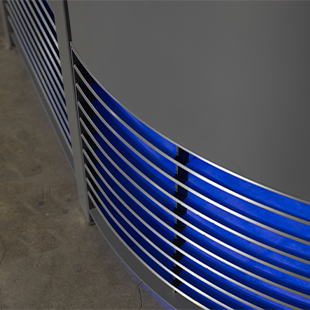
That same thinking generally shows up across public restroom design. The Portland Loo builds prefabricated restrooms for cities, parks, and transit agencies with anti-graffiti stainless steel surfaces that exist for the same reason split seats do: cut down on labor, cut down on vandalism, and keep the unit functional for years without constant intervention.
#3: More Comfortable for Different Users
The split design of a public restroom toilet seat makes the toilet more practical for different users and situations. The opening at the front provides additional clearance, which can make sitting down and standing up more comfortable and reduce the chance of a person’s body coming into unnecessary contact with the front of the seat. In a busy public restroom where the same toilet may be used by dozens of people throughout the day, that small design feature can make the experience more comfortable and practical.
The open front can also be useful for people who need to use the toilet while standing. It provides more room at the front of the bowl and can make it easier to position without having to maneuver around a solid seat. While the split design doesn’t eliminate the need for good hygiene or proper cleaning, it is one of several small features that make public restroom fixtures better suited to frequent, shared use.
#4: Designed for Busy Public Restrooms
Public restrooms experience much heavier use than most residential bathrooms, so their fixtures need to be designed with frequent, repeated use in mind. A toilet in an airport, restaurant, gas station, or office building may be used by dozens or even hundreds of people in a single day. Open-front toilet seats are well suited to these high-traffic environments because they are practical, easy to maintain, and designed to accommodate frequent cleaning.
The simpler design also makes it easier for cleaning staff to reach the front and sides of the toilet seat and bowl when wiping down and disinfecting the fixture. In a public restroom, where cleanliness and maintenance are ongoing concerns, small design choices like an open front can make routine upkeep more efficient. Combined with durable commercial-grade materials and regular cleaning, these seats are built to handle the demands of a shared restroom far better than a design intended primarily for occasional household use.
#5: Increased Theft and Vandalism Prevention
Believe it or not, the design of a public toilet seat can also help reduce the risk of theft and vandalism. Public restrooms have to withstand far more than everyday use; they also need to be designed with security and durability in mind. Fixtures that are simple, sturdy, and difficult to tamper with are less likely to become targets for damage or removal.
An open-front toilet seat has fewer materials and components than some more elaborate designs, which can make it a practical choice for high-traffic facilities. Its straightforward construction helps reduce opportunities for parts to be broken, removed, or misused. While the split design isn’t specifically intended as an anti-theft feature, choosing simple commercial-grade fixtures is part of a broader approach to keeping public restrooms secure, durable, and easier to maintain.
Theft and vandalism are part of a bigger public restroom safety conversation for facilities teams, one that goes well beyond seat design into lighting, sightlines, and materials.
What Split Toilet Seats Mean for Public Restroom Planning
None of this is really about the seat on its own. It’s about what happens when small, code-driven design choices get made deliberately instead of by default. A split seat, an anti-graffiti wall panel, and an exterior hand-washing station can make a facilities team’s job easier for the next ten years.
That’s the real takeaway for anyone planning or upgrading a public restroom. Cities and facilities weighing their options can talk to The Portland Loo about how durable, low-maintenance design choices work together.
Build Restrooms That Are Designed To Last with The Portland Loo
Split seats are a small piece of a much larger idea: a public restroom should be built to hold up under constant use without constant intervention. That’s the same philosophy behind The Portland Loo’s prefabricated restrooms.
Vandal-resistant stainless steel, an exterior-mounted hand-washing station, open safety grating, and easy-to-clean surfaces all serve the same purpose as the open-front seat: fewer headaches for the people who maintain them and a better experience for everyone who uses them.
Cities, parks departments, and transit agencies across North America already rely on this approach instead of the far more expensive traditional restroom build. If your organization is planning a public restroom project, reach out to The Portland Loo to talk through the design, durability, and maintenance details that matter most for your space.