
The way a public space is designed can influence how people behave in it. Good lighting, clear sightlines, visible entrances, and well-maintained surroundings can make an area feel safer while also making unwanted activity harder to conceal.
That idea is at the heart of Crime Prevention Through Environmental Design, or CPTED. Rather than relying solely on cameras, security personnel, or other reactive measures, CPTED uses thoughtful design to discourage crime and create spaces that are easier to monitor and comfortably use.
In this article, we’ll explain the core principles of CPTED, look at how they work in real-world public spaces, and explore practical ways communities can put them into practice.
Table of Contents
- What Is Environmental Crime Prevention?
- What Is Crime Prevention Through Environmental Design Theory?
- Physical Space to Social Strategy: The Evolution of CPTED
- A Safer Space by Design: The 5 CPTED Principles Explained
- Does CPTED Actually Work?
- Why Public Restrooms Need CPTED More Than Most Spaces
- The Portland Loo: Public Restrooms Built on CPTED Principles
What Is Environmental Crime Prevention?
Environmental crime prevention is any approach that uses the physical environment, including design, lighting, access points, and maintenance, to reduce opportunities for crime. CPTED is the most established and researched framework for putting that idea into practice.
Environmental crime prevention can take many forms, from trimming shrubs to improve visibility along a park path to redesigning a transit station entrance to better control access. CPTED brings those individual strategies together into a framework for designing public spaces that are safer, more visible, and less inviting to unwanted activity.
Think of it this way: if you’re walking home at night and you have the choice to cut through a dark alleyway behind closed businesses or a well-lit sidewalk along a public street, which are you more likely to choose?

What Is Crime Prevention Through Environmental Design Theory?
The basic idea behind CPTED is that the way a space is designed can influence how people behave within it. People are less likely to use spaces where they feel exposed or vulnerable, while visible, legitimate activity can help discourage crime.
CPTED is a design-based framework for reducing crime by shaping the physical spaces people move through every day. Criminologist C. Ray Jeffery developed the concept in 1971, arguing that crime could be reduced by changing the environment itself rather than only reacting to offenders after the fact.
The idea is simple. Design a space so intentional that users feel comfortable, and someone looking to commit a crime feels exposed. Good design invites the right people in while making unwanted behavior obvious.
Research on natural surveillance has found that visibility changes how offenders assess risk before acting. A well-lit, sightline-friendly space signals that someone might be watching, even if no one actually is. That perception alone changes decisions, and it’s the reasoning that leads directly into CPTED’s five working principles.
CPTED relies on design to make spaces feel safer.
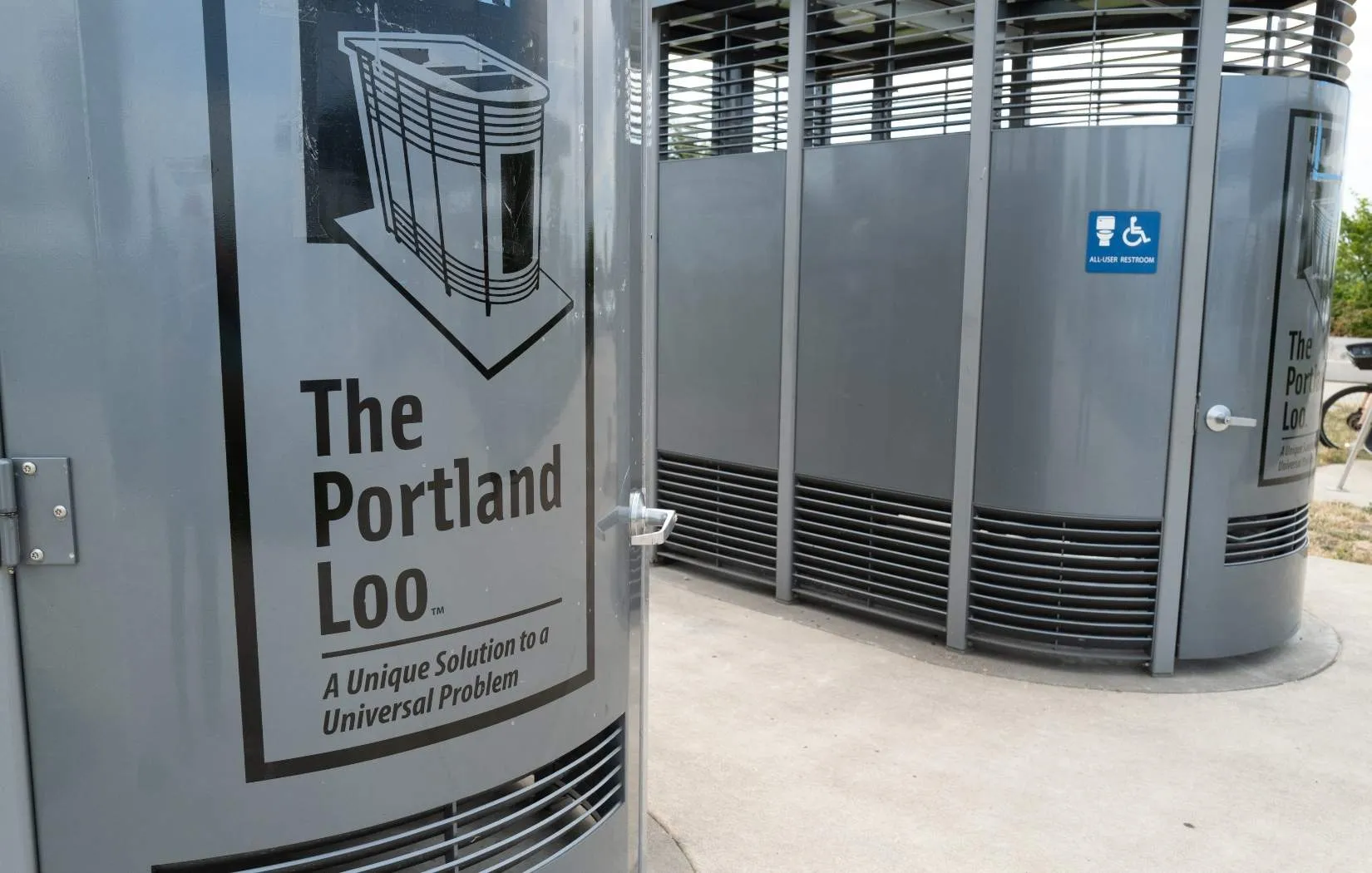
Public restrooms are one of the most overlooked places to apply CPTED. The Portland Loo sought to solve this problem and designed our prefabricated restrooms.

Physical Space to Social Strategy: The Evolution of CPTED
#1: First-Generation CPTED
First-generation CPTED, running roughly from the 1970s through the 1990s, focused almost entirely on physical security.
Locks, lighting, fencing, and sightlines were the main tools, treating the built environment as the whole solution. It developed alongside Oscar Newman’s related defensible space theory, though Newman’s model focused narrowly on building layout while CPTED considered the broader environment.
#2: Second-Generation CPTED
Second-generation CPTED added a social layer.
Researchers realized design alone couldn’t carry the weight, so community cohesion and resident engagement became part of the strategy alongside physical changes.
The framework, introduced by criminologists Greg Saville and Gerry Cleveland in the late 1990s, breaks that social layer into four elements:
- Social cohesion
- Connectivity
- Community culture
- Threshold capacity
In practice, that means resident associations, neighborhood watch groups, and community events count as prevention work alongside lighting and sightlines.
#3: Third-Generation CPTED
Third-generation CPTED folds sustainability, livability, and psychology into safety.
Safety is no longer a standalone goal; it is now part of a broader question: does this space actually improve the quality of life for the people who use it?
That question shapes how The Portland Loo approaches sustainable public infrastructure in cities of every size.
A Safer Space by Design: The 5 CPTED Principles Explained
CPTED turns the broader idea of environmental crime prevention into five practical design principles. Together, they address how people see, enter, move through, use, and care for a space, all of which can influence whether that space feels safe and whether unwanted activity goes unnoticed.
The five principles are most effective when they work together. Great lighting can improve visibility, for example, but if the surrounding space is poorly maintained, it can still feel neglected and unmonitored.
#1: Natural Surveillance
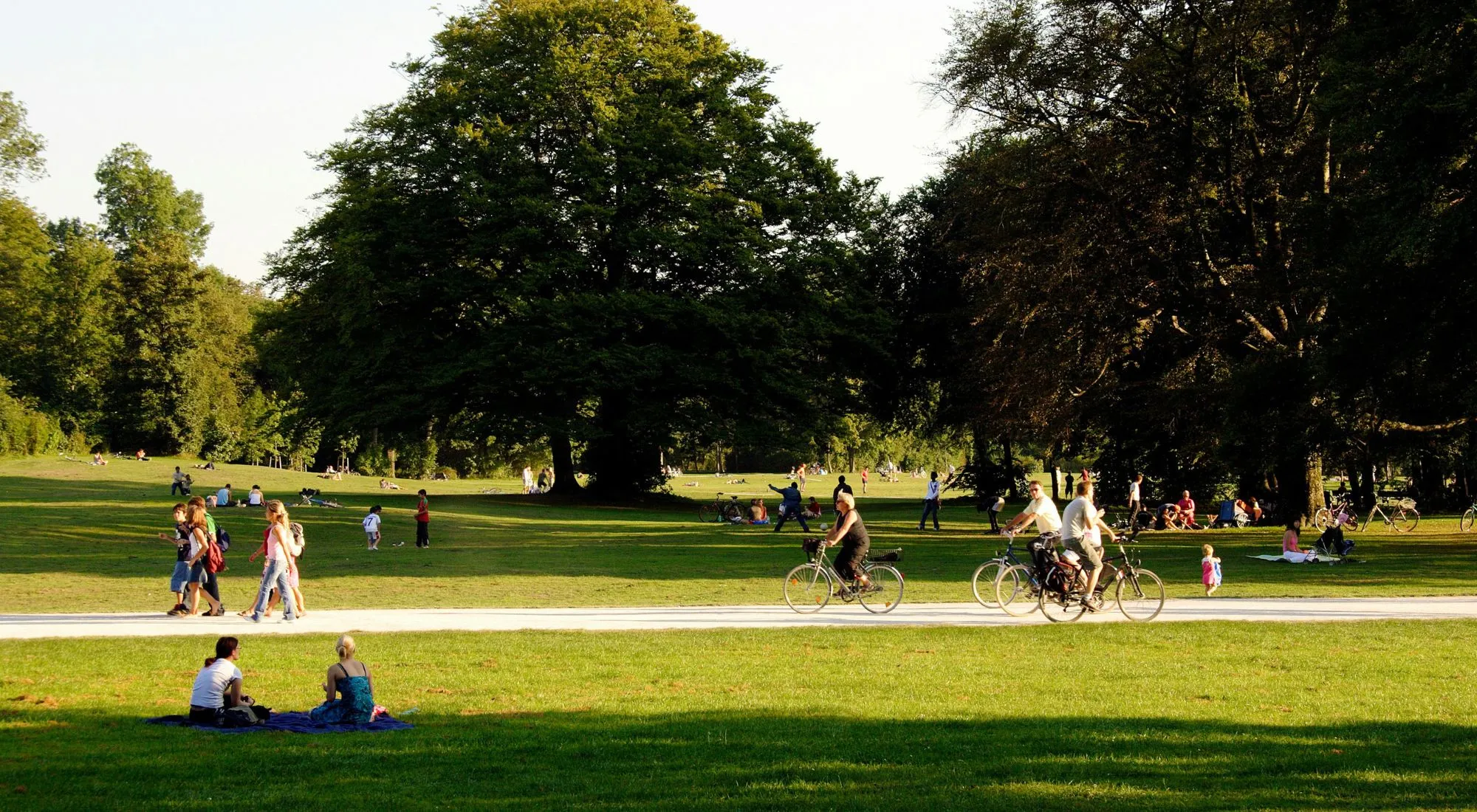
Visibility does most of the heavy lifting in CPTED design. When people can see and be seen, hiding spots disappear. At its core, natural surveillance is about designing a space to maximize visibility to the people who normally occupy or pass through it, so that presence itself becomes the deterrent.
Natural surveillance includes:
- Sightlines and adequate lighting that reduce the places where someone can act unobserved
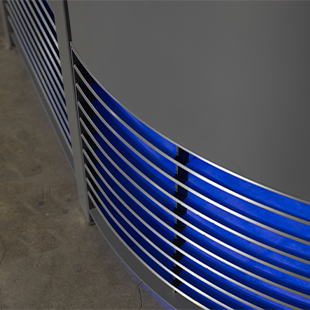
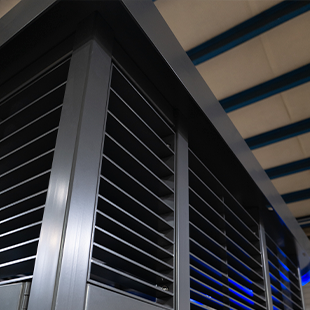
- Open-grating designs, like those used in many prefab public restrooms, that allow airflow and visibility without sacrificing privacy
- Windows facing parking lots, walkways, and entrances that turn ordinary building occupants into passive lookouts
#2: Natural Access Control
Clear boundaries guide movement and make unauthorized entry obvious. The underlying idea is to shape how a space is used so visitors move naturally toward where they’re meant to go, while anyone deviating from that path stands out and feels a heightened sense of being observed and out of place.
Natural access control includes:
- Clearly defined entrances and exits that make trespassing obvious
- Pathways, gates, and landscaping that funnel people toward legitimate entry points and away from vulnerable areas
- Locking mechanisms and single points of entry that reduce the number of access points someone has to monitor
#3: Territoriality
Ownership cues signal that a space belongs to someone, and spaces that look owned are treated with more respect. A clearly claimed space raises the social and psychological costs of trespassing, since it signals a presence that is ready to notice and challenge anyone who doesn’t belong there.
Territoriality includes:
- Low walls, signage, and landscaping that distinctly mark the boundary between public and private space
- Well-defined spaces that discourage outsiders from treating an area as neutral or abandoned
- Personalized or distinct design choices that make a space feel claimed rather than generic
#4: Maintenance
Cared-for spaces get respected. This connects to the well-known broken windows effect, where visible neglect invites more neglect. Left unaddressed, small signs of decay signal that no one is watching or cares enough to intervene, which lowers the perceived risk of getting caught for anyone considering more serious offenses.
Maintenance includes:
- Well-kept materials signalling that someone is actively paying attention
- Anti-graffiti surfaces that discourage tagging
One act of neglect tends to invite the next, so upkeep matters more than initial build quality.
#5: Activity Support
Encouraging legitimate use of a space crowds out illegitimate use before it starts. More foot traffic and visible, everyday activity mean more informal eyes on a space at any given time, which makes it a less attractive setting for anyone looking to act without being noticed.
Activity support includes:
- Regular foot traffic that makes loitering harder to sustain
- Frequently used amenities that bring more legitimate activity into the space
- Spaces designed for daily use rather than isolated structures that sit empty for long periods
Does CPTED Actually Work?
Research suggests that well-implemented CPTED strategies can reduce both crime and calls for service by 30–60%. Results vary depending on the setting, the strategies used, and how consistently those measures are maintained over time.
One potential limitation is displacement, which occurs when crime moves from one location to another rather than being eliminated altogether. However, research indicates that displacement does not necessarily offset the benefits of crime-prevention efforts. Even when spatial displacement occurs, the increase in nearby crime is typically smaller than the reduction achieved in the targeted area.
Why Public Restrooms Need CPTED More Than Most Spaces
Public restrooms rarely appear in CPTED case studies, even though they concentrate significant crime risk and public value in a single small structure. A restroom sees heavy, often unsupervised use around the clock, which makes it exactly the kind of space CPTED was built to address.
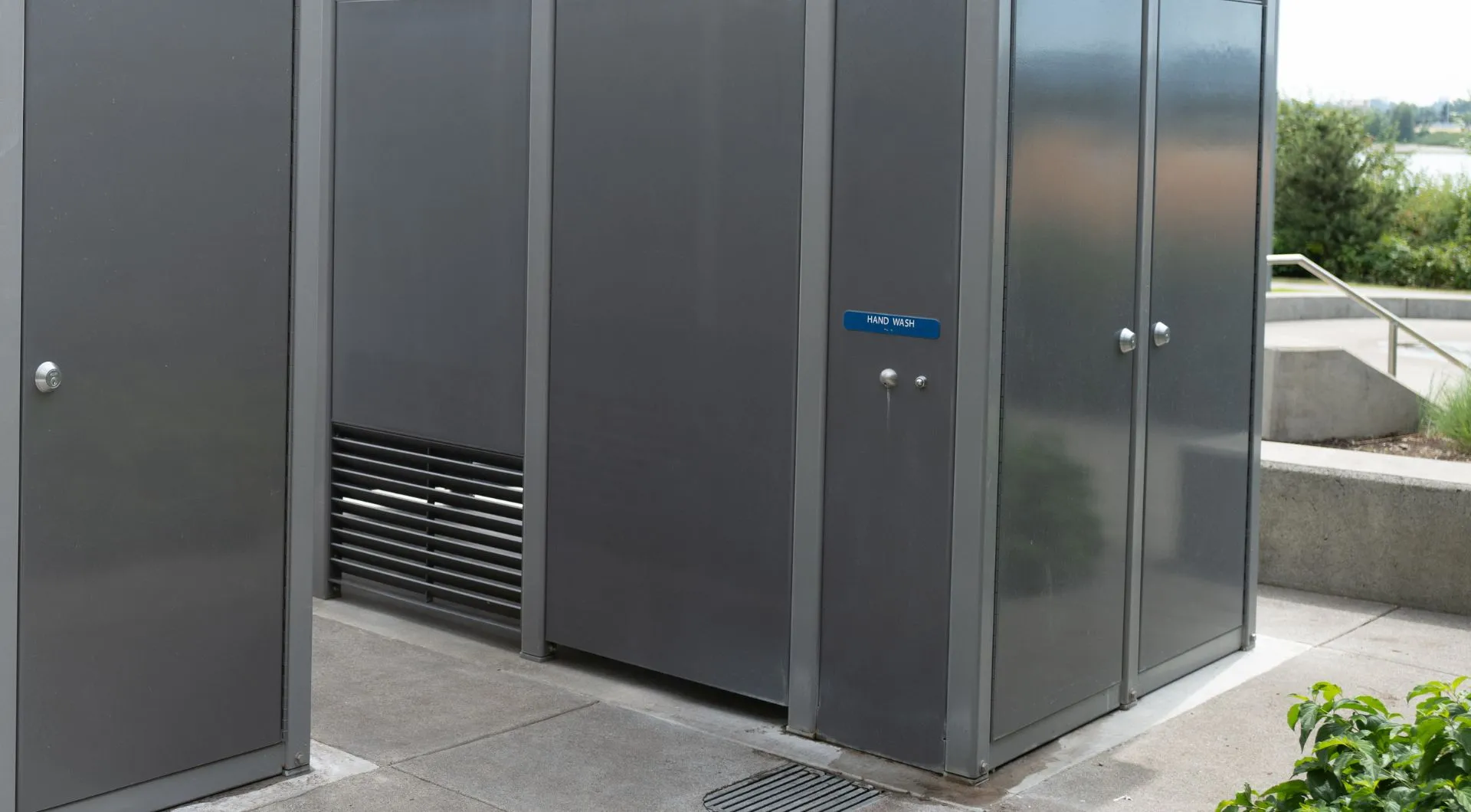
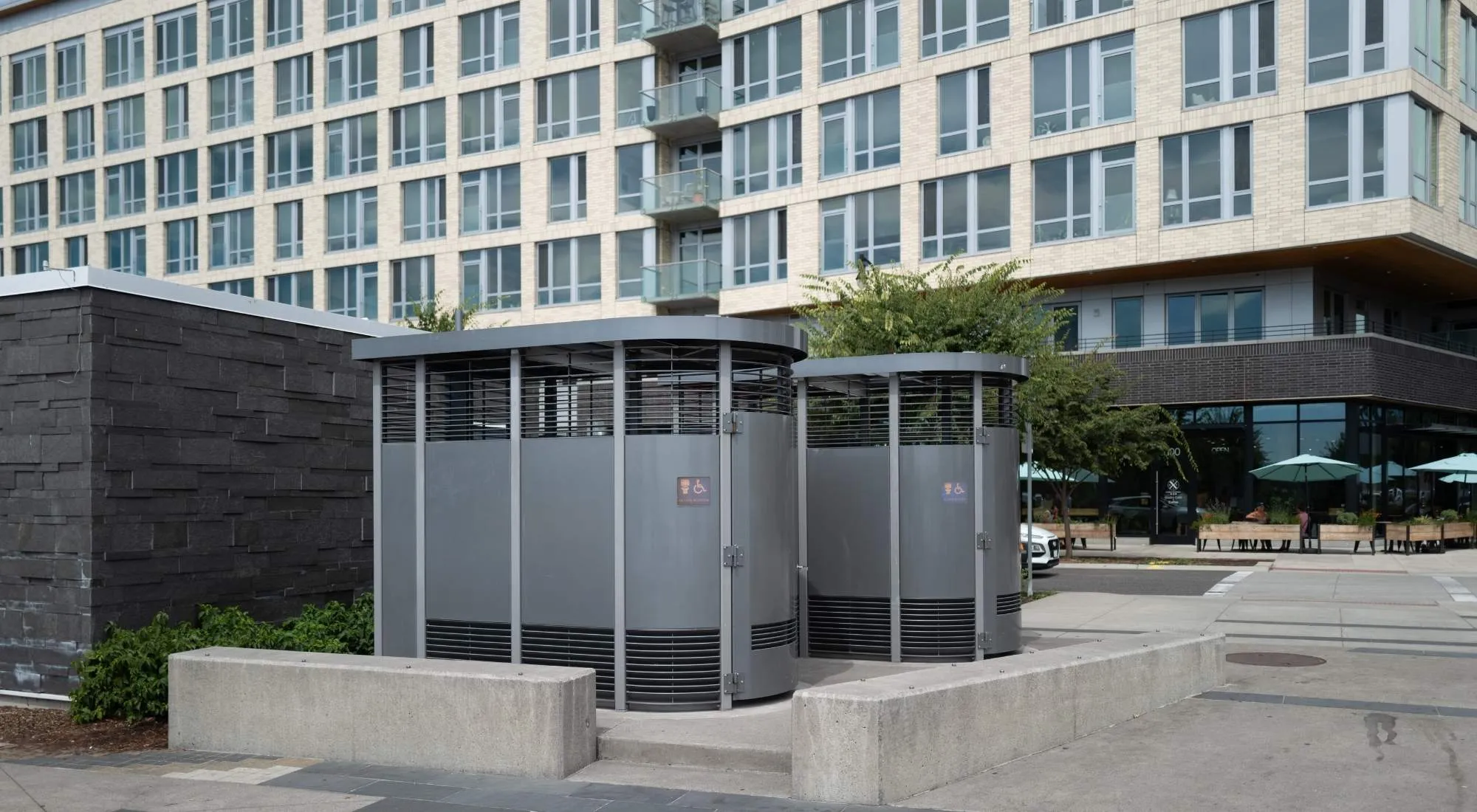
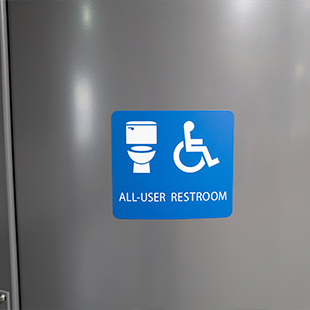
The Portland Loo’s design choices map directly onto CPTED’s five principles. Open grating at the top and bottom of the structure supports natural surveillance without eliminating privacy. An exterior-mounted handwashing station limits occupancy time and reduces the likelihood that anyone will linger inside. Remote lock mechanisms give staff natural access control without making the unit feel locked down or hostile.
These features show how CPTED can be built into a public restroom from the start rather than added later as a security measure. The result is a space designed to support everyday public use while helping discourage misuse, which is exactly what The Portland Loo was created to do.
The Portland Loo: Public Restrooms Built on CPTED Principles
The Portland Loo was designed to address many of the challenges that come with providing safe, accessible public restrooms. Features such as open grating, durable stainless-steel construction, exterior handwashing stations, and controlled access reflect CPTED principles while still providing users with privacy and a comfortable restroom experience.
These features also make the restroom easier for cities to monitor, maintain, and keep available for its intended purpose. Instead of relying on added security measures after installation, the design itself helps create a safer and more manageable public space.
If your city is planning new public restrooms or looking for a better solution for an existing location, contact The Portland Loo to learn how CPTED-informed design can support your public space goals.