The humble toilet has one job and one job only. Yet, over the years, it’s been subjected to countless improvements. Some of these changes were crucial technological updates, while others… well, let’s just say they should have been flushed away immediately. Buckle up and hold your nose as we take a look at some of the worst toilet ideas to ever ruin a bathroom experience.
Carpeted toilet lids.
We’re kicking off our list with a product of the mid-20th century: carpeted toilet lids. What was initially intended to make bathrooms more comfortable and warm quickly became a laughingstock of future generations. And, rightfully so! They’re fertile breeding grounds for bacteria and virtually impossible to clean. Don’t even get us started on carpeted floors in bathrooms.
Toilet seats that refuse to stay up.
Toilet seats that don’t stay up are public bathroom enemy #1 for those who need to stand or squat (hey, no judgment here!). This problem is usually crappy hinges, loose screws, or just poor design. Regardless, you’re left with a lose-lose choice between holding it and risking it with the lid down. Often, the first option isn’t really an option at all.
Transparent stall doors
Nope, this isn’t something out of a bad sci-fi novel. There are, in fact, public restrooms with completely transparent barriers. These “artistic” Japanese stalls turn opaque once they’re locked, but that doesn’t instill much confidence. What if the lock malfunctions or the technology goes haywire? No thanks!
Further Reading: 5 Reasons We Love The Loo’s Steel-Paneled Walls
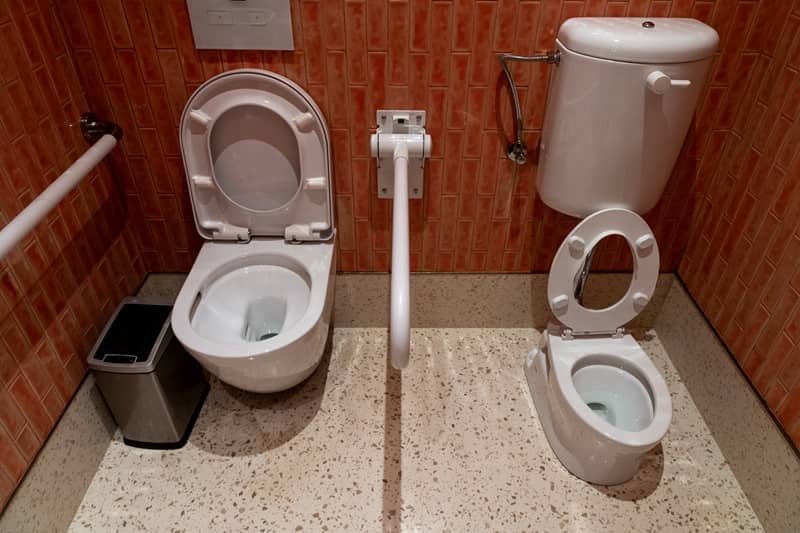
Uncomfortably low toilets
Bathroom users stand at various heights, but we’re all in the same position when sitting on the throne. Some toilets are so close to the ground that it feels like an impromptu game of “How low can you go?” It might be a fit for Olympic acrobats, but for everyone else, these uncomfortably low commodes are a one-way ticket to groan town.
Overly sensitive auto flushes
In theory, motion-sensing flushing is a great idea. You minimize touchpoints in public restrooms while saving water, right? Not with the overly sensitive ones! These bad boys keep users on their toes, threatening to release a whirling flush and an unwelcoming bidet-style splash at any point. Plus, all that wasted water is enough to fill a small pool.
Cramped toilets
Some toilets are the product of their environment; others are the victim of poor design. For example, porta-potties have an excuse for their cramped design. But, every once in a while, you come across a public toilet straight out of “Honey, I Shrunk the Kids” but in reverse. In these miniature Johns, every extremity is in contact with a stall wall. Not the most relaxing environment in the world to get the job done.
Single-ply toilet paper
Whoever said “less is more” was never stuck in a public restroom with single-ply toilet paper. These tissue-thin pieces need to be stacked three, four, or even five deep for even the slightest chance at success. Every motion becomes a strategic move in avoiding the feared tear or finger poke. It’s a true test of precision, patience, and sheer will.
Toilets that charge to use
The US might have a frightening lack of public restrooms, but most toilets don’t cost anything. Many countries, especially in Europe, are plagued with pay-to-pee facilities. Often, you’re sh*t out of luck if you don’t have exact change. Ironically, this financial barrier exacerbates some of the problems public restrooms are designed to address in the first place.
No hooks or shelves
Whether running errands, at the airport, going to a concert, or out on the town, you’re often stuck “going” with your belongings. A lack of shelves or hooks is a glaring issue in these instances. It transforms what could be a quick visit to the restroom into a circus complete with precarious balancing acts and amateur juggling performances. Just make sure your stuff doesn’t hit the ground!
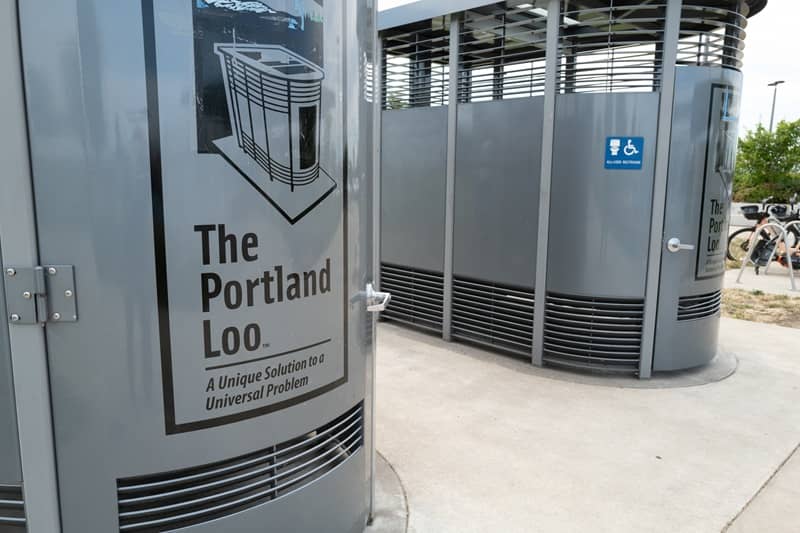
Toilets have undergone some questionable changes over the years. The Portland Loo is heading in the opposite direction by shedding everything trivial and adding modern improvements. As the first toilet by the city, for the city, the Loo is equipped with everything cities need and nothing they don’t. If you’re interested in bringing a Loo to your city, follow these tips.